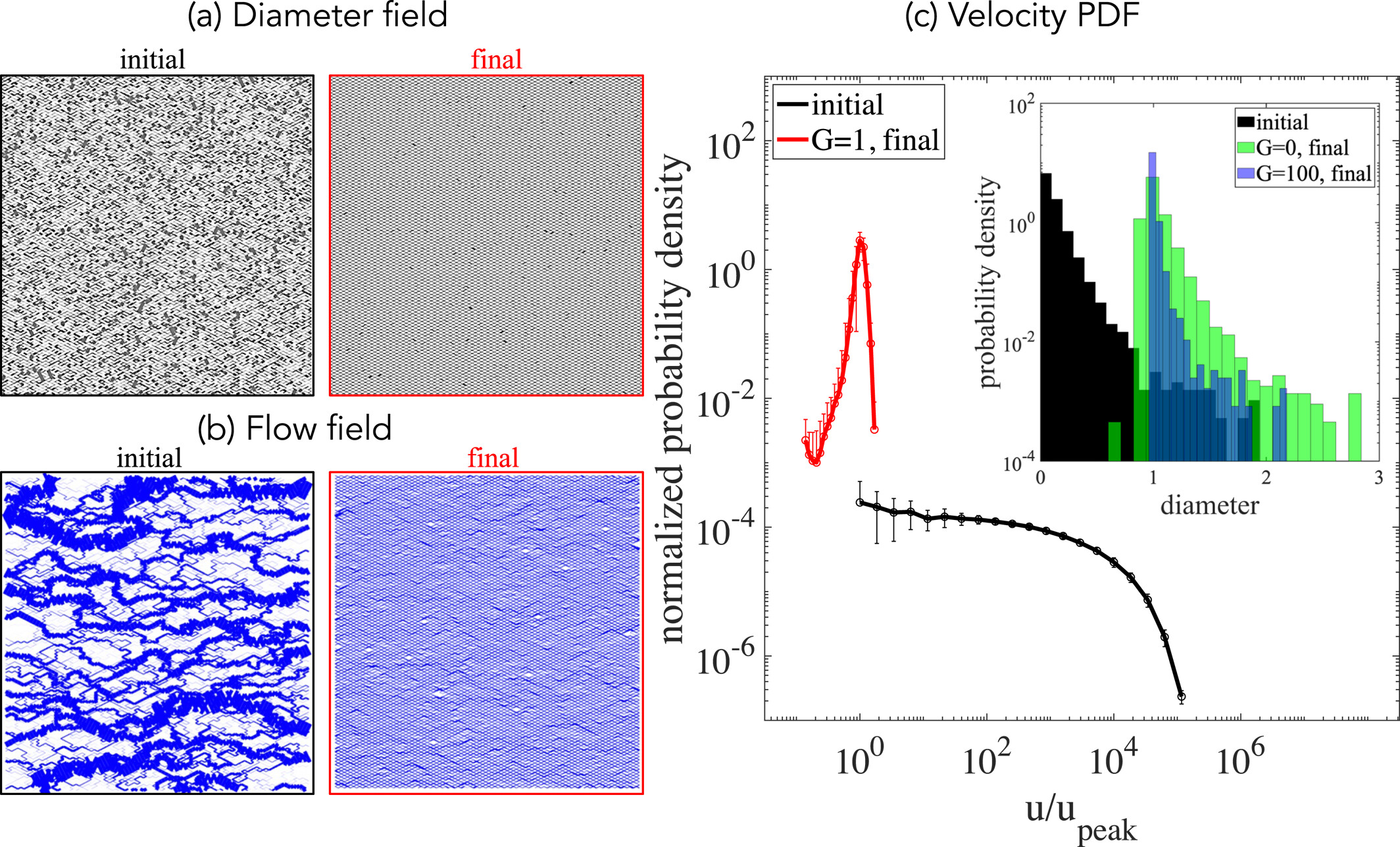
Mineral dissolution reshapes the internal structure of porous materials, creating distinct patterns such as wormholes. This process drives key geological phenomena, including the formation of caves, sinkholes, and subsurface drainage systems characteristic of karst terrains. The resulting structural changes significantly impact fluid flow and solute transport through porous materials. In this study, we investigated how the initial pore structure and two specific dissolution regimes—wormholing and uniform dissolution—affect solute movement. Our findings reveal that wormholing, through the development of preferential flow paths, gives rise to complex transport patterns (non-Fickian behavior). In contrast, uniform dissolution reduces structural heterogeneity, leading to more predictable solute movement (Fickian behavior), even in initially highly heterogeneous systems. We show that the transition between these transport behaviors is controlled by the interplay between initial pore structure and the prevailing dissolution regime. These findings improve our understanding of solute transport in subsurface systems, with important implications for managing groundwater resources, storing carbon dioxide underground, and mitigating environmental contamination.
Read our paper Deng et al. (2025).
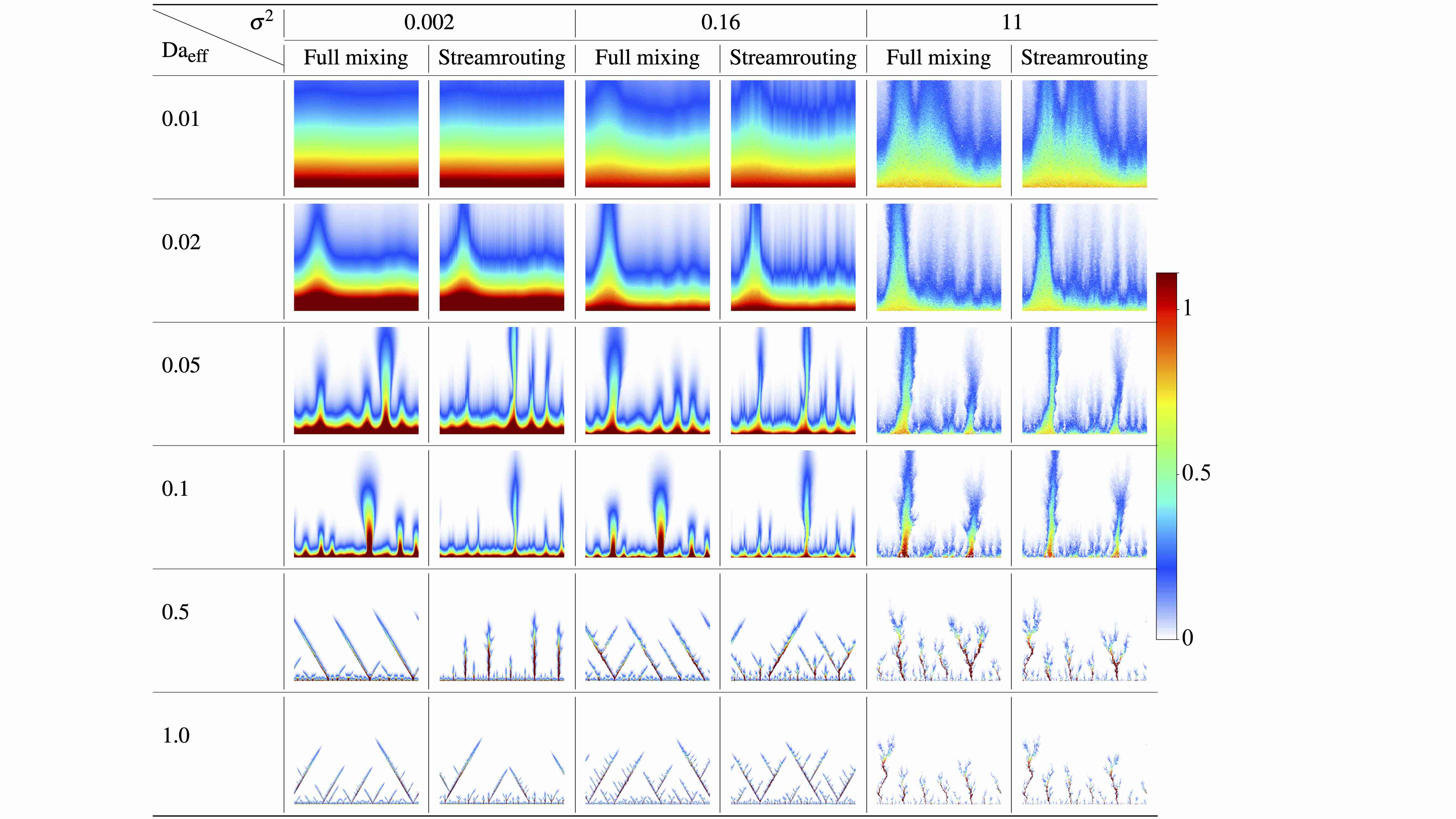
When a reactive fluid infiltrates the rock, the dissolution channels (wormholes) can spontaneously form, in which the flow and transport of reactant focus. The formation and growth of such channels is a complex phenomenon in which the processes taking place at the micro-scale are strongly coupled with the macro-scale patterns. One of these processes is the mixing of reactant-saturated water at pore intersections. In this paper, we study how the intensity of the mixing process impacts the shapes and growth velocities of the dissolution channels. We find that when the mixing at pore intersections is relatively weak, the flow focuses more strongly in front of the wormhole tip, which reduces the width of the wormhole and leads to its faster propagation and early breakthrough. These effects are also evident from tracer breakthrough curves. Our findings contribute to the understanding of dissolution-induced patterns, with implications to subsurface flow-related processes such as karst formation and contaminant migration.
Read our paper Sharma et al. (2023).
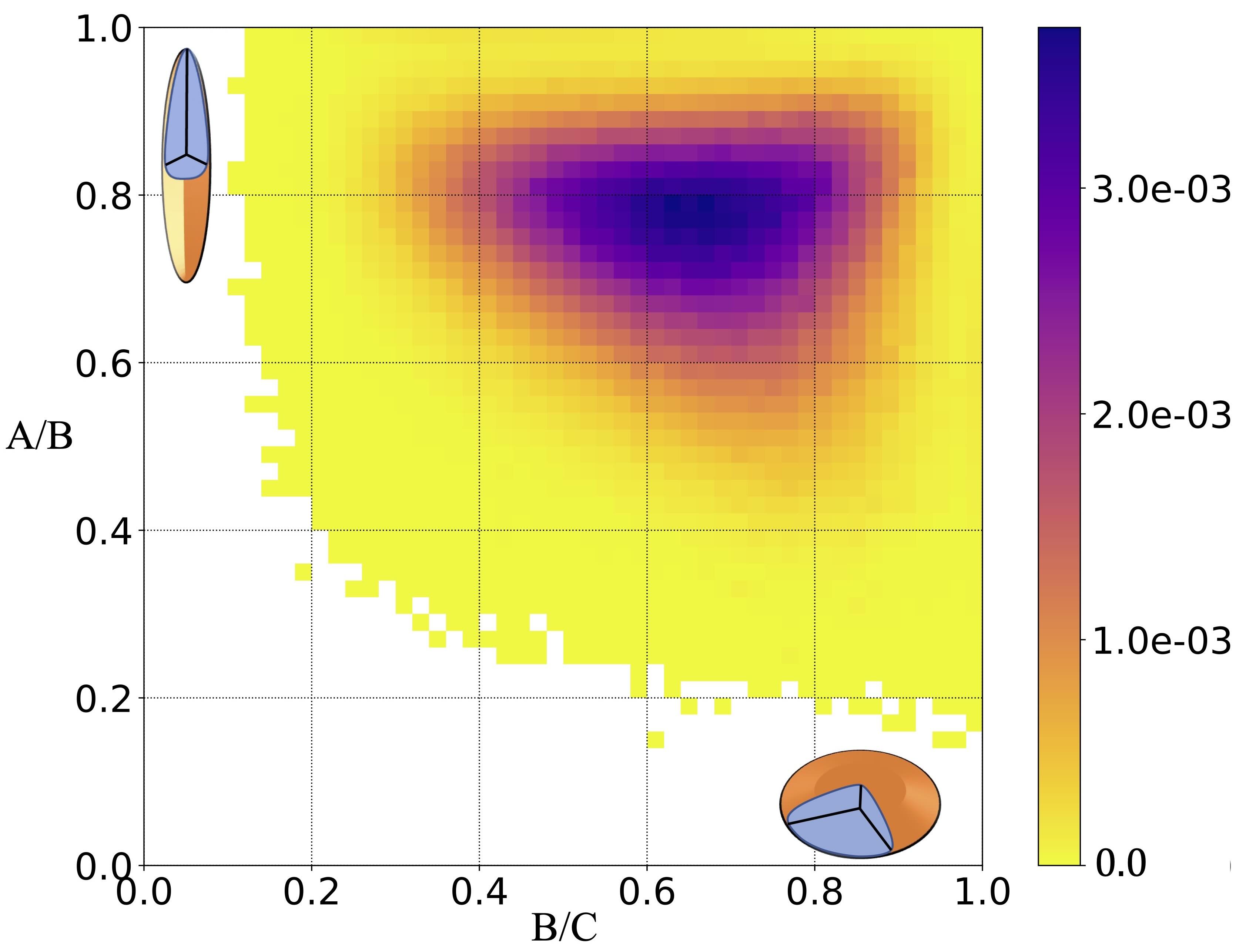
We develop methods for qualitative and quantitative assessment of pore geometry transformation within a rock as a result of karstification. We then apply these tools to characterize dissolution-induced changes in limestone samples collected from a quarry in Smerdyna (Poland), where intense epikarst development is observed, consisting of a large number of solution pipes. Partially dissolved samples collected in the immediate vicinity of the pipes were compared with undissolved samples collected 1.5 meters away. For both types of samples 26 micron resolution grayscale X-ray scans were performed. The irregular geometry of the pore space, the vast majority of which forms a single connected component, can be conveniently characterized by a local thickness function that corresponds to the diameter of the largest sphere that fits within the pore space and contains a given point. We compare the local thickness distributions of the undissolved and dissolved samples as well as a numerically generated uniformly dissolved sample. Such a comparison allows us to quantify the extent of homogeneity of the natural karstification process. The above analysis is complemented by the calculation of connectivity of the pore space as well as their flow characteristics. All of the results consistently indicate an important role of pore merging and inhomogeneous dissolution in the process of natural dissolution for the analyzed samples.
Read our paper Sharma et al. (2023).
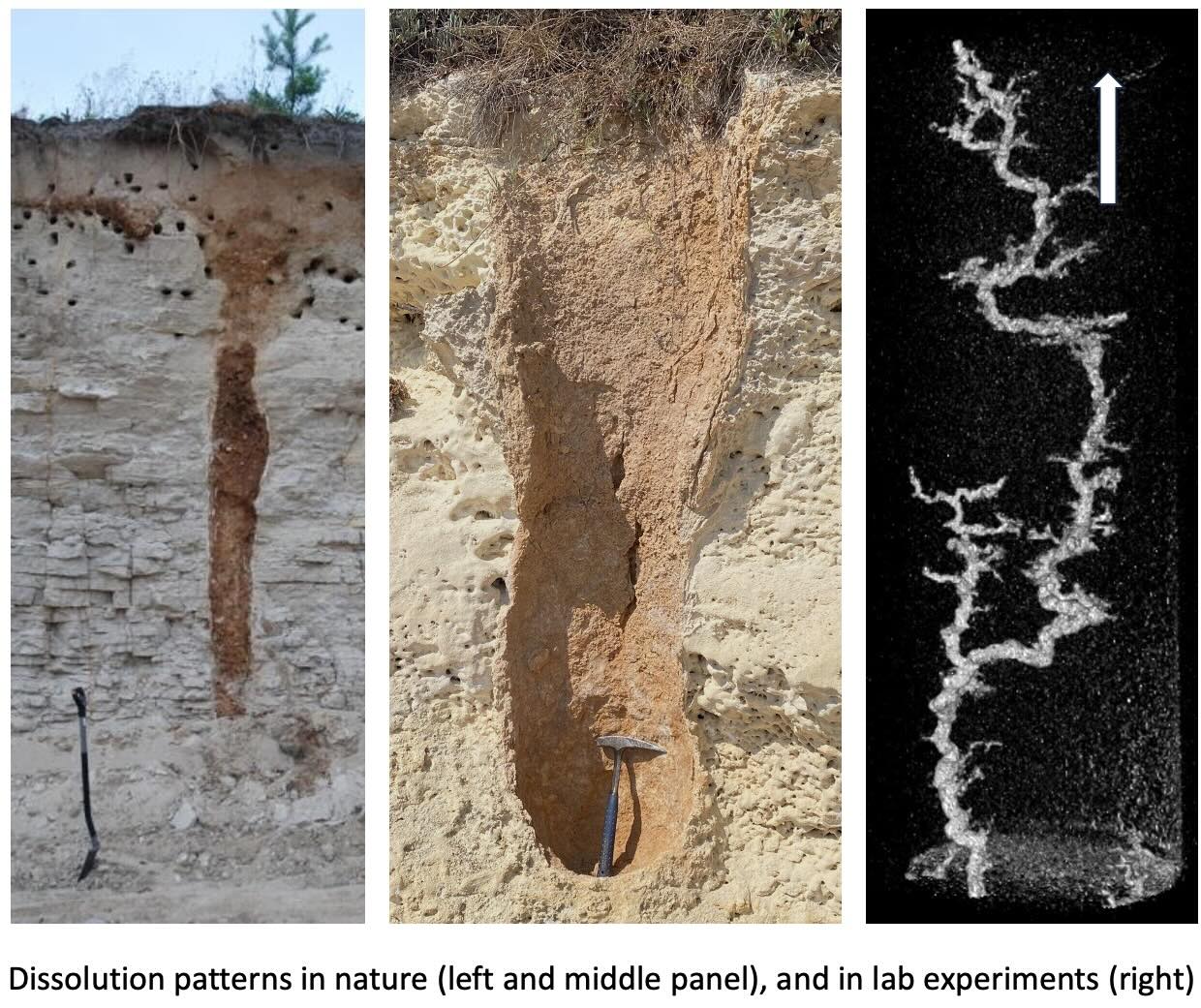
Dissolution of porous media induces positive feedback between fluid transport and chemical reactions at mineral surfaces, leading to the formation of wormhole-like channels within the rock. Wormholes provide highly efficient flow and transport paths within rock, and as such, understanding their formation is critical for controlling contaminant migration or preventing leakage during geological carbon sequestration. Here, using time-resolved X-ray tomography, we capture the dynamics of wormhole propagation, inaccessible by standard experimental methods. We find a highly non-trivial relationship between wormhole advancement and variations in permeability of the rock, with extensive periods of steady advancement not reflected by significant change in permeability. This is in contrast to most existing conceptual models where wormholes advance in a linear fashion. We show that this is caused by the presence of highly cemented regions which act as barriers to flow, as confirmed by multi-scale analysis of the pore geometry based on tomographic, (ultra) small angle neutron scattering, and optical microscopy measurements. These results demonstrate that time-lapse captured wormhole dynamics can be used to probe the internal structure of the rock.
Read our paper Cooper et al. (2023)..